The Wild Days guide
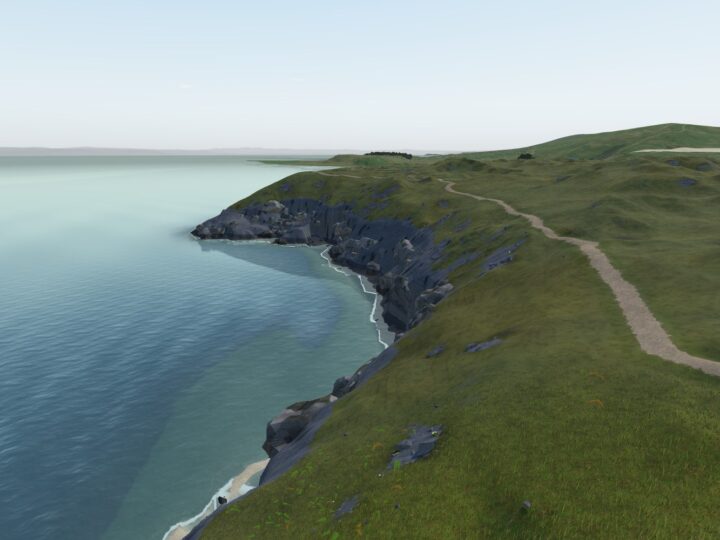
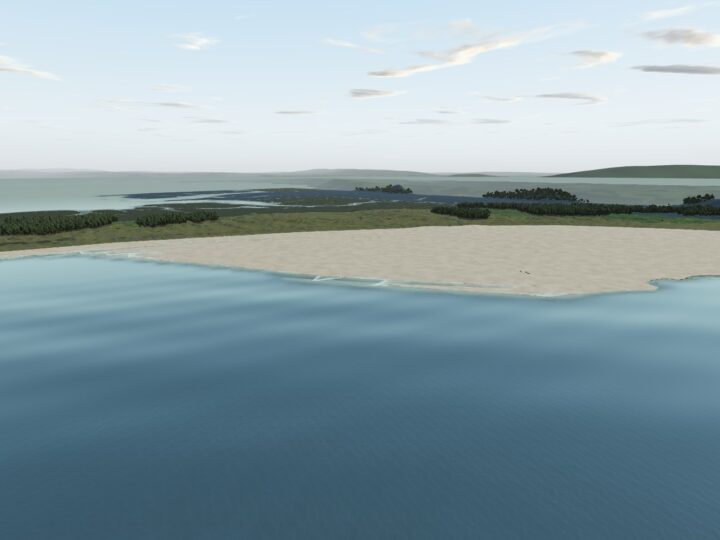
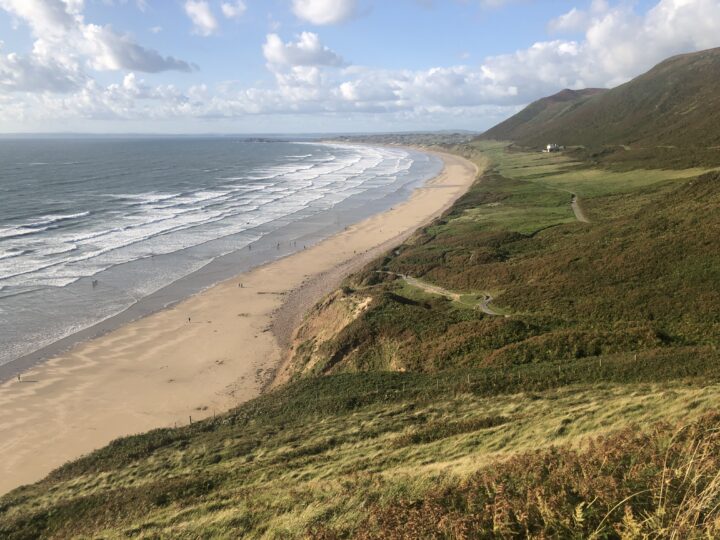
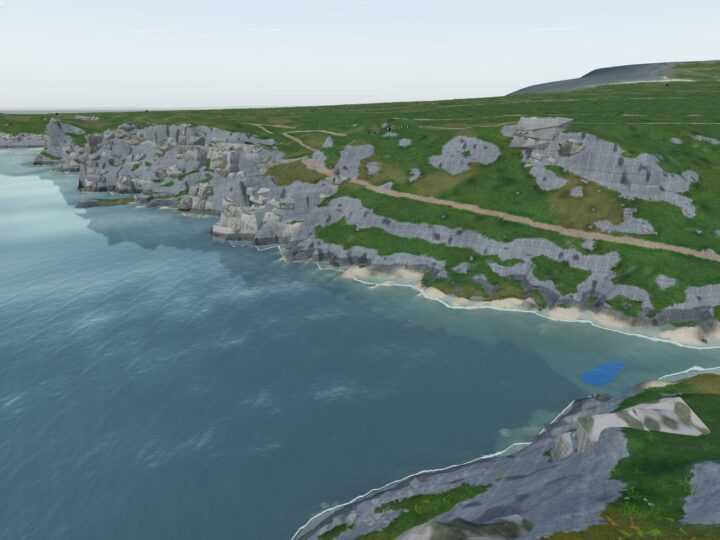
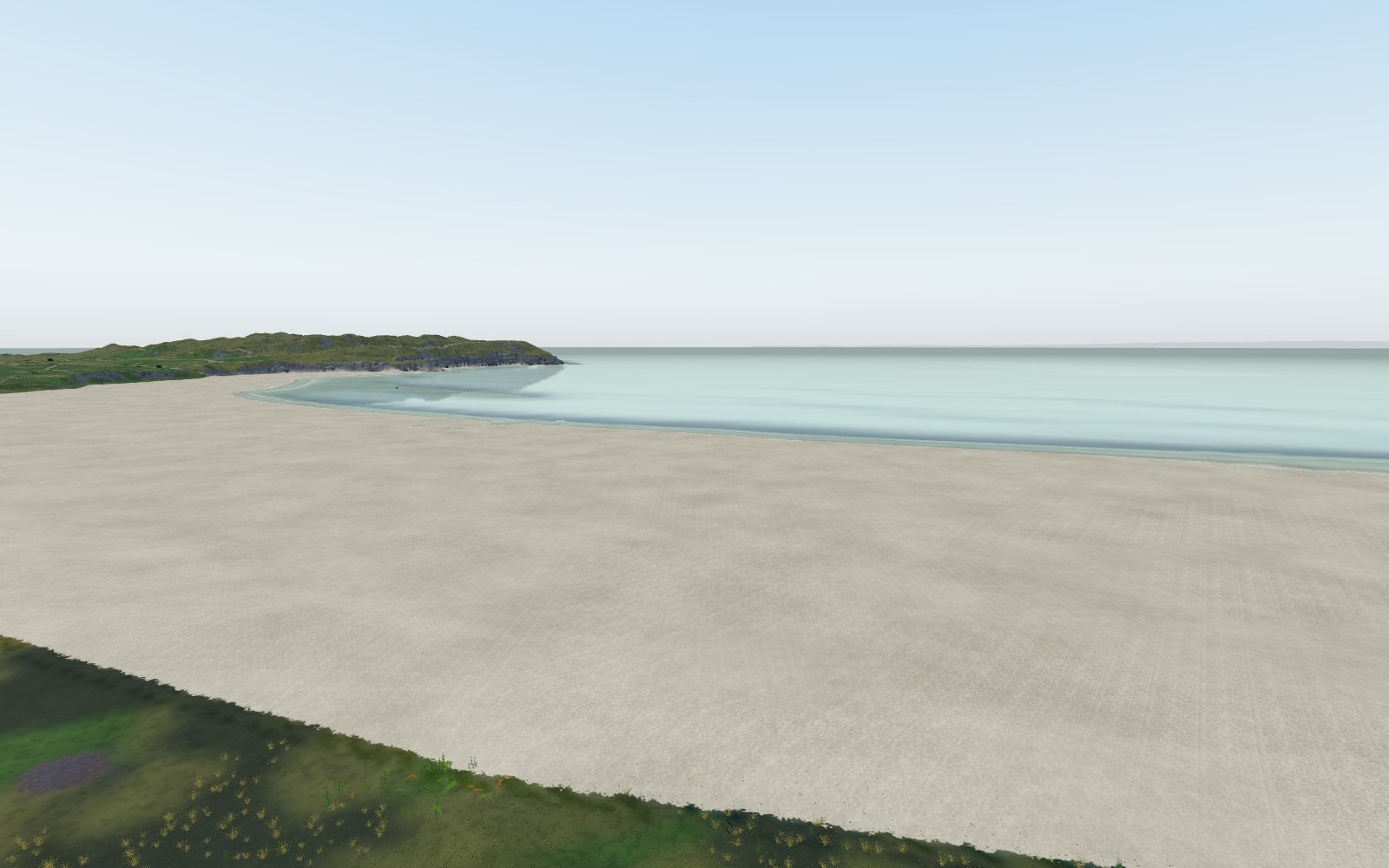
Broughton is the quiet one: a dune-backed bay on Gower’s north-west corner, looking across Carmarthen Bay to the Pembrey coast and, on clear days, Caldey and Tenby. It is a beach for long walks rather than swims, with limestone tors at each end and the clifftop path leading off to Blue Pool Bay and Burry Holms.
Why it’s worth the trip
Broughton sits between Rhossili Bay and Whiteford and gets a fraction of the visitors of either. The bay is backed by dunes and framed by low limestone headlands: Twlc Point to the west, and to the east the tors of Prissen’s, Hills and Cwm Ivy, which divide it from Whiteford Sands at high tide.
The ebb from the Loughor estuary makes the water dangerous for swimming, but that is what keeps it so peaceful. Come for firm sand at low tide, rock pools and caves on the ledges, dune flowers in summer and huge skies over the estuary. It also makes a great base for the whole north-west corner: walk west along the clifftop to Blue Pool Bay and Burry Holms, or east over the tors to Cwm Ivy and the Whiteford dunes, and come back along the beach at low tide.
Make a wild day of it
Surfing
In a big west-south-westerly swell, Broughton turns on a left-hand point break with long rides, best with a south-easterly wind around mid to high tide. It is very much an experienced surfer’s wave, with strong currents, no lifeguards and a remote setting. Windsurfers sometimes use the bay in strong south-westerlies. On most days, Llangennith round the corner is the place to surf.
Rock pools and caves
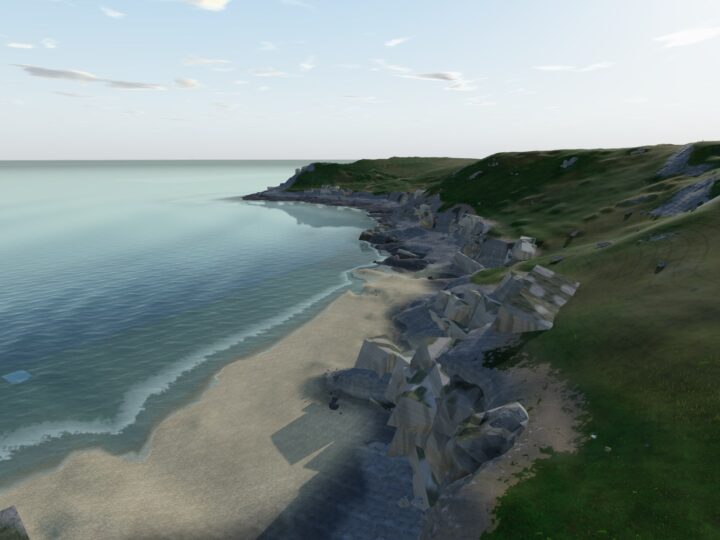
The limestone ledges at Twlc Point, and the rocks round the tors at the eastern end, have small caves, ledges and rock pools at low tide. Just west along the clifftop is Blue Pool Bay, with its famous natural rock pool and the Three Chimneys arch, both reachable only around low water.
Wildlife
Broughton Bay is part of the Whiteford Burrows, Landimore Marsh and Broughton Bay Site of Special Scientific Interest, next to the Burry Inlet and its internationally important wintering waders and wildfowl. Marram grass and dune flowers cover the burrows in summer. Paddleboarders here report clear water with whitebait, mullet and bass below, and big jellyfish in late summer. In winter, look for oystercatchers, curlews and other waders along the shore towards Whiteford.
The rocks
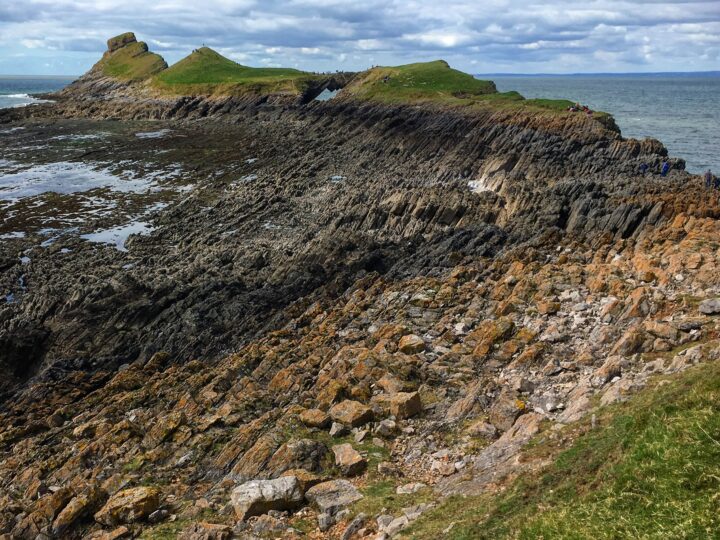
The bay is a pocket of sand and dunes held between low limestone headlands. To the east, the outcrops of Prissen’s Tor, Hills Tor and Cwm Ivy Tor mark the southern end of Whiteford Burrows, Gower’s biggest dune system, which built up from wind-blown sand in the late medieval period. The sand is full of crushed shell, and that lime is what feeds the dune flowers.
History and stories
On Llanmadoc Hill above the bay stands The Bulwark, a large Iron Age hillfort. West along the coast, Burry Holms has traces of Mesolithic hunters, an Iron Age fort and a medieval hermitage linked to St Cenydd. The Whiteford dunes to the east hide medieval shell middens and the remains of a Second World War lookout. Off Whiteford Point in January 1868, a fleet of coal-laden sailing ships from Llanelli was driven onto the sandbanks, and nineteen lives were lost.
Tides and safety
Swimming is not recommended here at any state of tide. Very strong currents run out of the Loughor estuary and can carry swimmers out into it, and on top of that there are powerful waves, a big tidal range and shifting sandbanks. There are no lifeguards. Paddle with care on calm days, and if you want a swim, Rhossili Bay is better on a calm day, though it has no lifeguards either.
At low tide you can walk round the tors onto Whiteford Sands, or west towards Blue Pool Bay, but both routes are cut off as the tide rises, so check the tide times and turn back in good time. Conditions round Burry Holms can be very challenging, and the island itself is cut off at high water.
When to go
Low tide is best, when the sand is at its widest and you can walk round to Whiteford or along to Blue Pool Bay. Summer brings dune flowers and long evenings, winter brings waders and solitude, and sunset over Carmarthen Bay is lovely from the tors.
Broughton stays fairly quiet even in high summer, partly because nobody comes here to swim. Walk east towards the tors and you will usually have the far end of the bay to yourself.
Good to know
- Toilets: a wheelchair-accessible visitor toilet in the Broughton Farm Caravan Park office. Nothing on the beach.
- Food and drink: nothing on the beach. The King’s Head Inn in Llangennith, the Britannia Inn in Llanmadoc, and Eddy’s Cafe and the campsite shop at Hillend.
- Dogs: welcome all year with no seasonal restriction, and a favourite for dog walks. Keep them on leads near livestock on the clifftops and tors.
- Lifeguards: none.
- Access: a steep concrete ramp leads down to soft sand. It is possible with an all-terrain pushchair but hard work for a wheelchair.